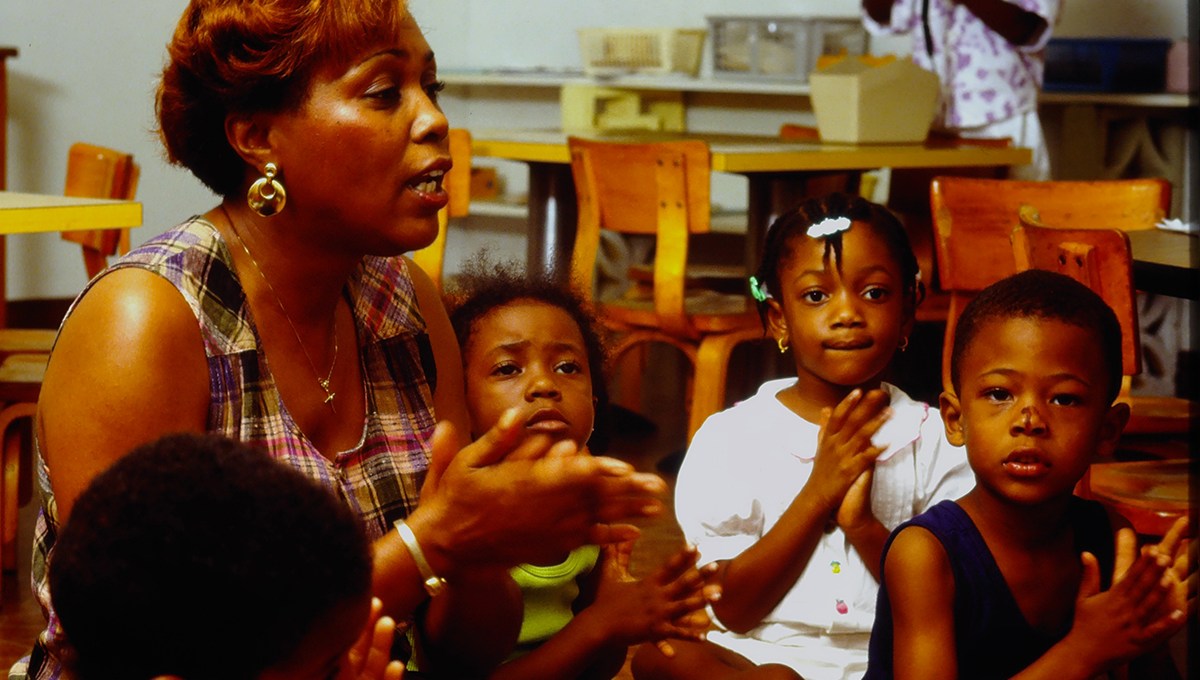
During the 1980s, the Ewing Marion Kauffman Foundation launched and operated its own programs, starting with Project Star in 1984, Project Choice in 1988, and Project Early and Project Essential in 1989. The idea, according to Lou Smith, president and CEO of the Kauffman Foundation from 1995 to 2002, was to “help our community become self-sufficient and to offer the opportunity for both young people and adults to make a job rather than just take a job.”
The Foundation’s early programs aimed to create conditions that made that success feel possible.
1984 | Project STAR
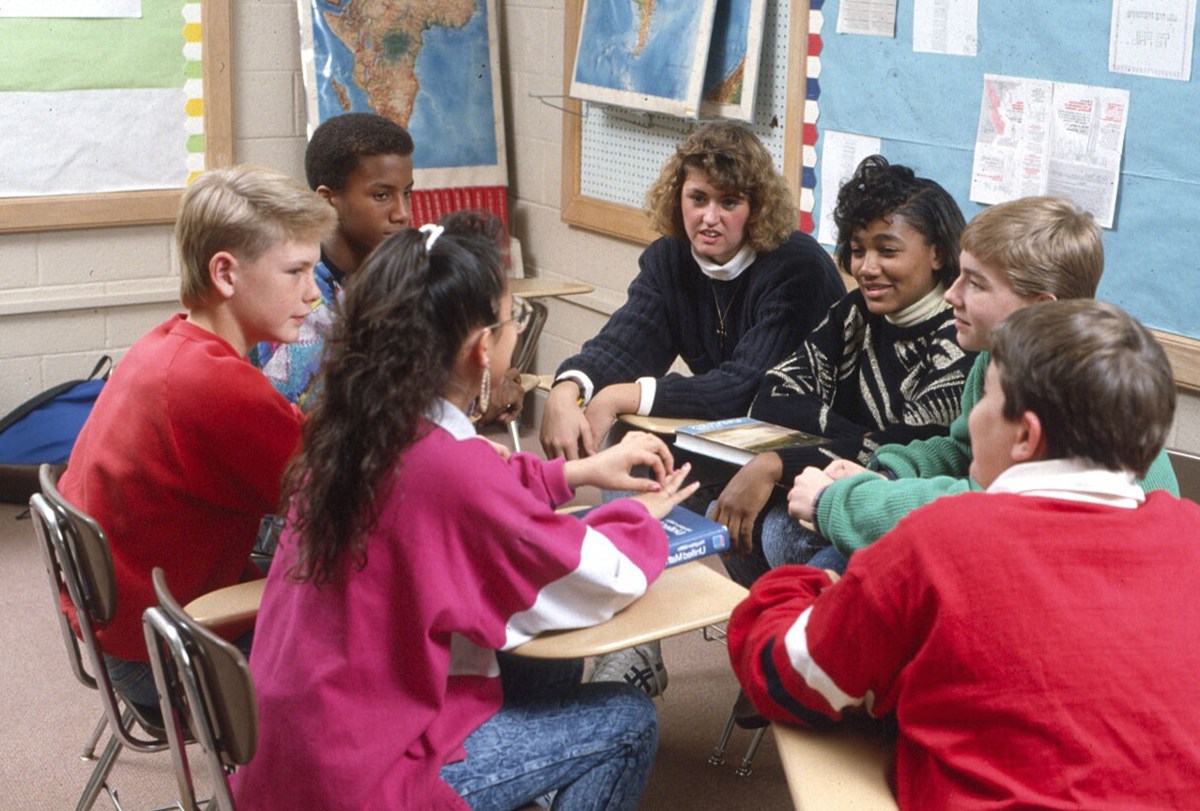
Following a 1983 cocaine scandal involving Kansas City Royals players, and amid growing national concern about drug use, Kauffman launched Project STAR, which stood for Students Taught Awareness and Resistance. The comprehensive drug-prevention program was implemented in Kansas City schools. In roughly 10 years of operation, more than 100,000 students participated.
Project STAR paired rigorous evaluation with large-scale programming by linking classroom curricula, media campaigns, and community coalitions.
“It wasn’t a one-pronged program,” said Dr. Stacey Daniels Young. “It involved school-based learning and practicing, and it had a parental component, it had a
community component, and it had a lot of media. It involved 15 school districts, so that was huge.”
Project STAR helped establish research and evaluation as hallmarks of the Foundation’s work, laying the groundwork for later investments in data and evidence. Its impact also elevated the Foundation’s profile in national drug-prevention conversations. In 1989, President George H. W. Bush appointed Ewing Kauffman to a presidential commission on drug prevention.
1988 | Project Choice
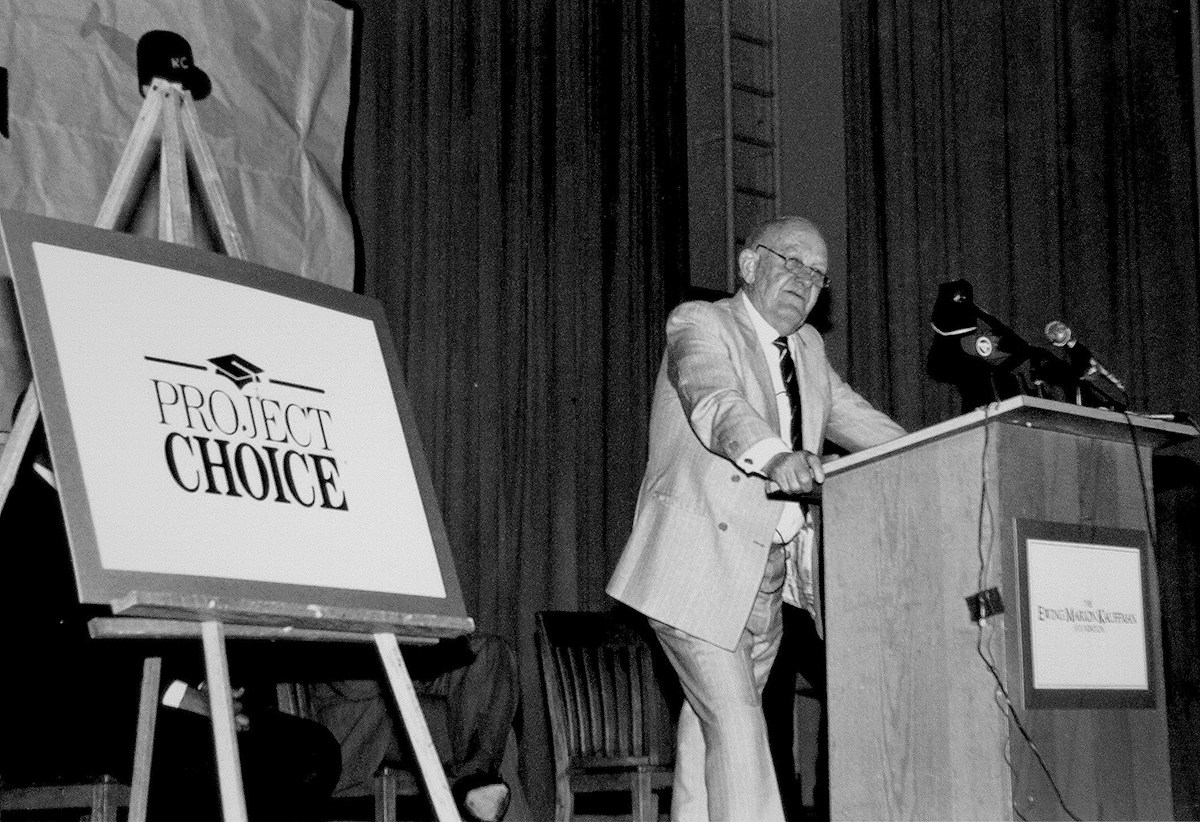
From the auditorium of his alma mater, Westport High School, Ewing Kauffman told 240 eighth graders that if they stayed in school and graduated, Project Choice would provide full scholarships for college or other post-secondary education, along with support services to help them reach their goals.
Project Choice operated from 1988 to 2001 and became a signature program of the Foundation. In addition to four full classes at Westport High School (Class of 1992-1995), the program welcomed smaller cohorts of students from Harmon, Schlagle, Washington, and Wyandotte high schools and Sumner Academy of Arts and Science in Kansas City, Kansas, ultimately serving more than 1,400 students.
“If you give those kids hope for the future, if you let them know that somebody cares about them, you’ll be surprised at what they can achieve,” Kauffman said.
Project Choice was an early “promise scholarship” model linking financial aid, mentoring, and clear expectations. It was an approach the Foundation would return to, pairing scholarships with wrap-around support, and focusing on specific Kansas City communities. Its design and lessons directly influenced Kauffman Scholars and later initiatives, including KC Scholars, Great Jobs KC, and the Ewing Marion Kauffman School.
1989 | Project Early and Project Essential
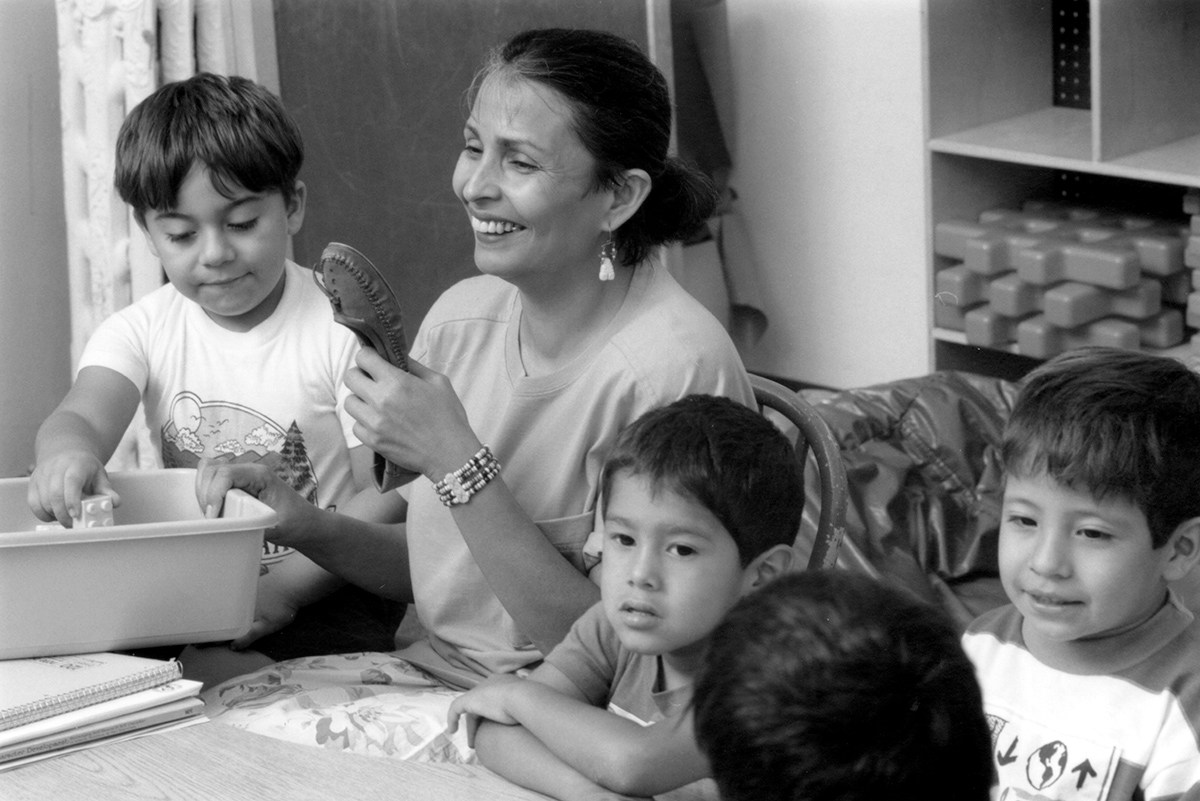
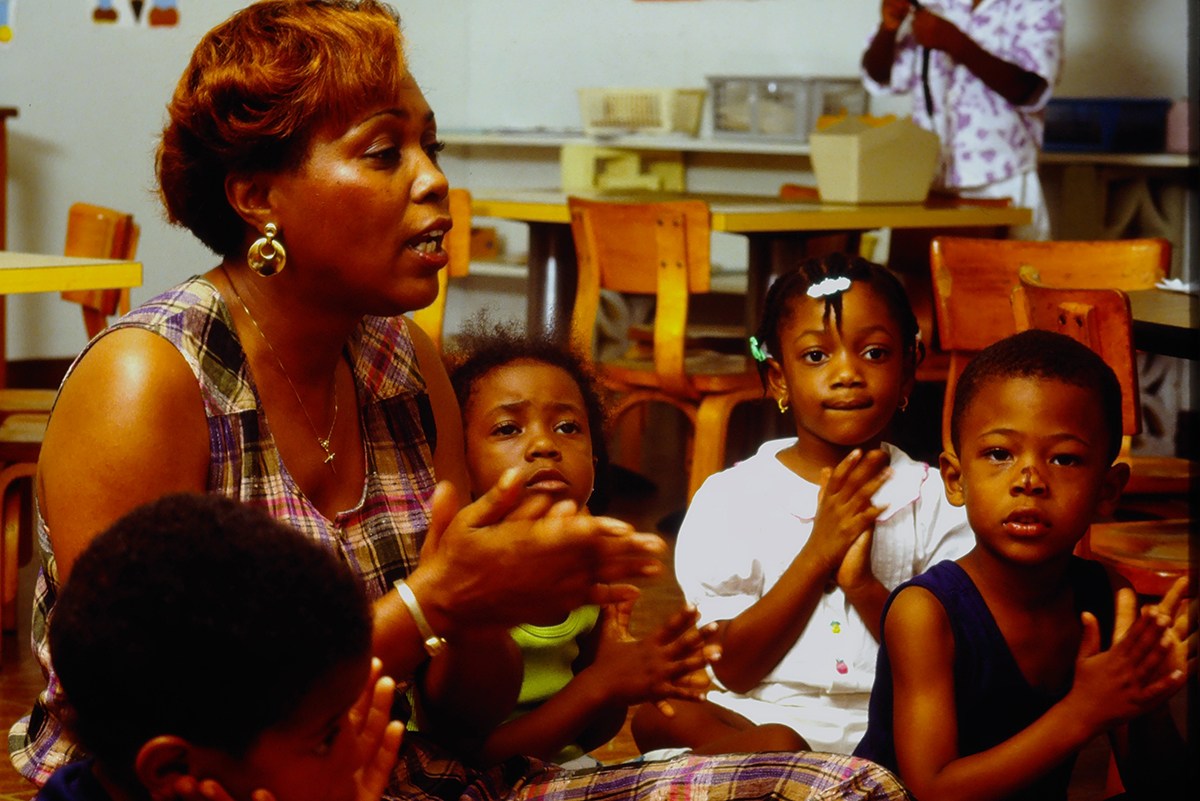
Kauffman believed that academic success depended on early literacy, self-worth, and supportive adults. Building on Project STAR, the Foundation launched two additional youth development initiatives in 1989. Project Early focused on early childhood education, while Project Essential focused on building self-esteem in young people.
Steve Roling, an associate at the Ewing Marion Kauffman Foundation from 1991 to 2002, remembers that Kauffman set high expectations for young people, much like his mother had set for him. He didn’t want them to think the best they could do was work at McDonald’s, Roling said. He wanted them to believe they could own a McDonald’s.
Together, the Foundation’s early programs established a pattern it would revisit for decades: test ideas, measure results, and continually refine how it supported people from education through careers and entrepreneurship. That learning helped inform later education initiatives, including Kauffman Scholars, KC Scholars, Great Jobs KC, and Real World Learning, while its entrepreneurship work expanded through efforts such as the Kauffman Center for Entrepreneurial Leadership, Kauffman FastTrac, and 1 Million Cups.
The programs also informed the Foundation’s evolution from operating programs to a broader role as a grant maker and capacity builder.
“We were deeply invested in the community, but the reality was Project Choice – and I think most people would agree with this – was significant in how it informed us about the realities of addressing the issues, the opportunities, and the problems of our at-risk community,” Lou Smith said.
Smith believed the programs made progress while also teaching the Foundation how to approach its work as a philanthropy. “It just taught us so much about how we ought to operate as a major philanthropy – get involved, research, evaluate, be a partner.”