Powering possibility across decades.
Timeline
Explore the moments and milestones of community-led initiatives driving opportunity in Kansas City since 1966.
Opportunity begins with a community willing to try.
1966—1986 | The Founding Years
Kansas Citians helped shape early health and youth initiatives, establishing a hands-on approach grounded in participation, learning, and evidence.
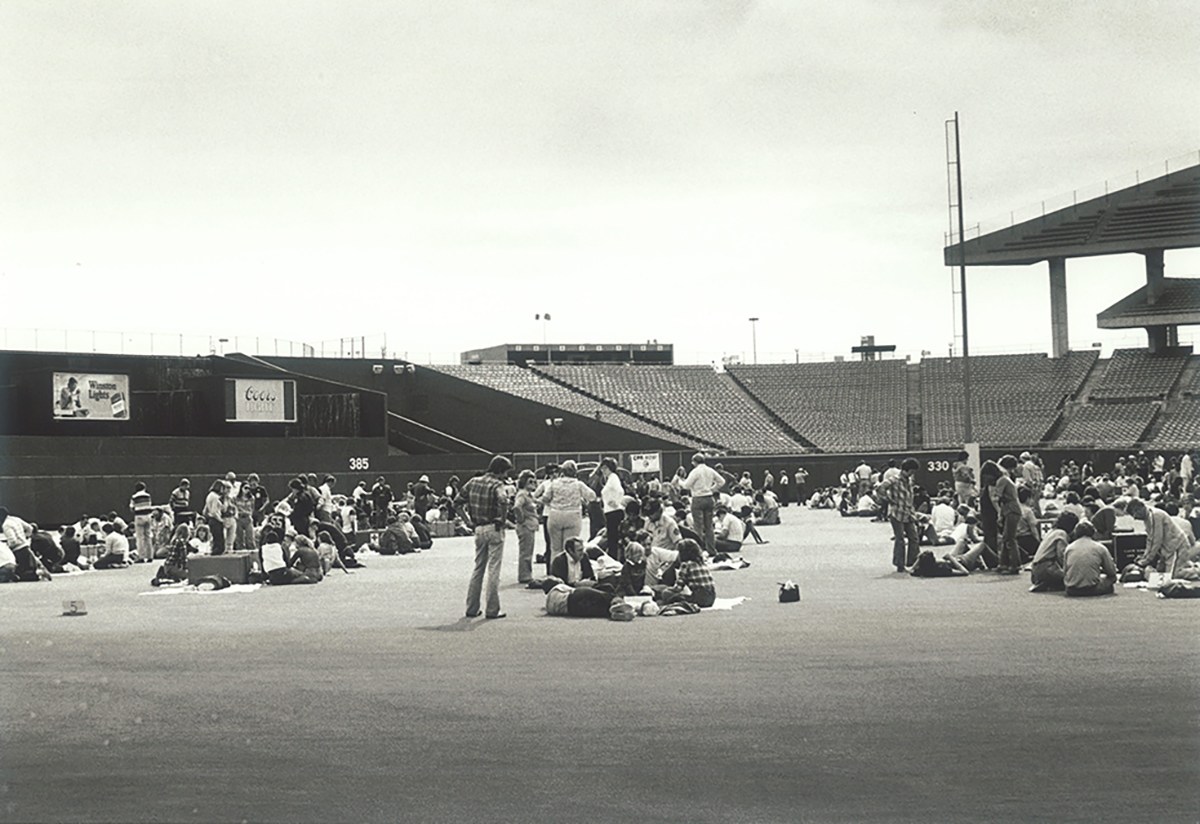
GROUNDED IN KANSAS CITY: Community health • Youth development • Research and evaluation
PRESIDENT & CEO: Ewing Kauffman (1966-1987)
01 Opportunity
Kansas City families and young people needed practical tools to build healthier lives and make informed choices.
02 Action
The Foundation created and operated CPR NOW, Project STAR, and the Kauffman Teen Survey, pairing direct community engagement with sustained research and evaluation.
03 Impact
125,000
people learned CPR as the program expanded from Marion Laboratories to public training across the Kansas City region.
04 Legacy
This era established a lasting approach: work alongside the community, test ideas locally, measure what works, and carry the learning forward.
Featured stories from 1966—1986
-
Education
-
1966-1986
The Founding Years
Entrepreneurship
-
Education
-
Building the Marion spirit: A culture of opportunity and shared success
1966-1986
The Founding Years
Kansas City


Lasting opportunity takes more than a promise.
1987—1994 | Building an Enduring Foundation
The Foundation paired long-term support for young people with practical entrepreneurship education, turning Mr. K’s beliefs into programs built to endure.
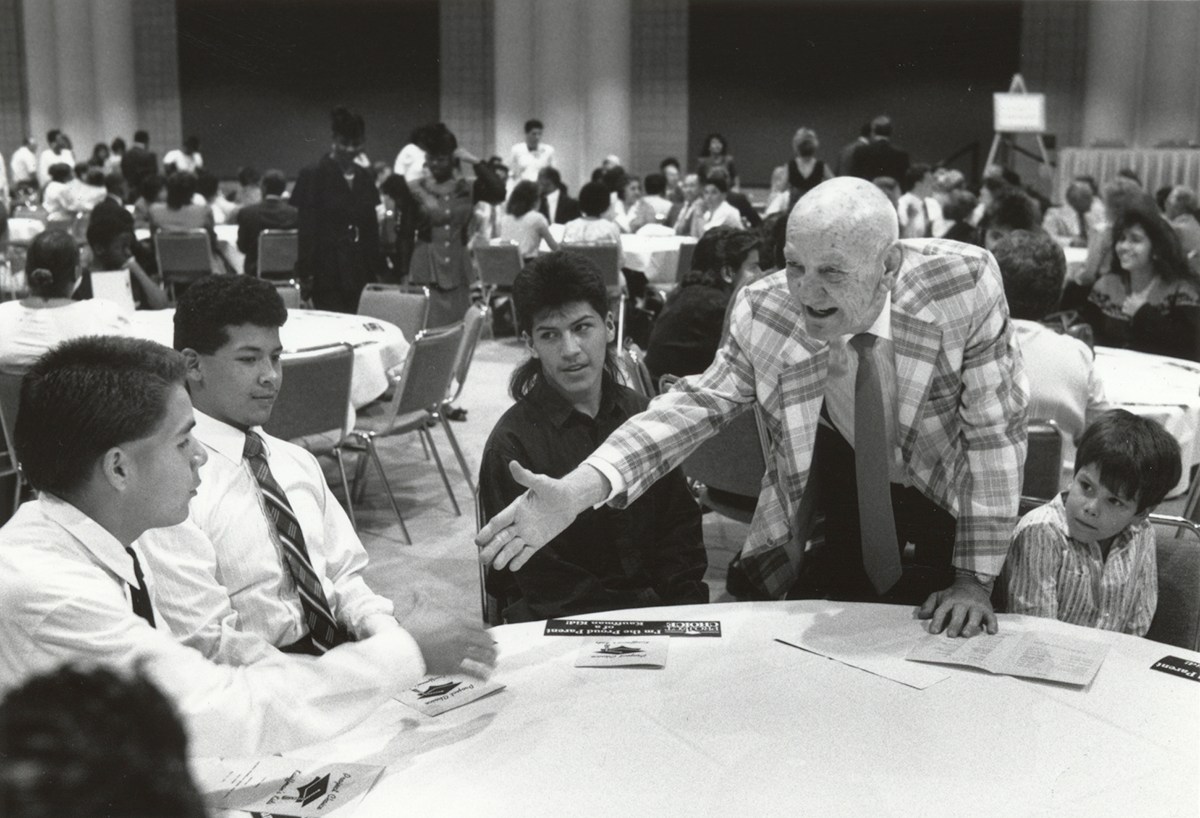
GROUNDED IN KANSAS CITY: Education • Entrepreneurship • Youth development
PRESIDENT & CEO: Ewing Kauffman (1966-1987) • Mike Herman (1987-1990) • Bob Rogers (1990-1995)
01 Opportunity
Young people needed sustained support to finish school and pursue college, while aspiring entrepreneurs needed practical ways to turn ideas into businesses.
02 Action
Project Early, Project Essential, and Project Choice supported youth development, while KCEL and FastTrac made entrepreneurship education more accessible.
03 Impact
1,400+
students were served by Project Choice, which combined scholarships, mentoring, and clear expectations for high school completion.
04 Legacy
This era connected education and entrepreneurship around one idea: people can shape their futures when opportunity is matched with tools, support, and high expectations.
Featured stories from 1987—1994
-
Entrepreneurship
-
Project Choice: scholarships with support and a clear promise
1987-1994
Building an Enduring Foundation
Education
-
KCEL: Building a culture and curriculum of entrepreneurship
1987-1994
Building an Enduring Foundation
Entrepreneurship
-
1987-1994
Building an Enduring Foundation
As I look at the courtyard [where the Foundation is located], looking east, I just get very excited about the possibilities to build community in this wonderful area.
— Bob Rogers, former president and CEO, 1990-1995
Kansas City


A stronger city creates more ways for people to thrive.
1995–2002 | Deepening Roots in Kansas City
The Foundation deepened its Kansas City roots through civic institutions, public spaces, youth leadership, and hands-on learning.
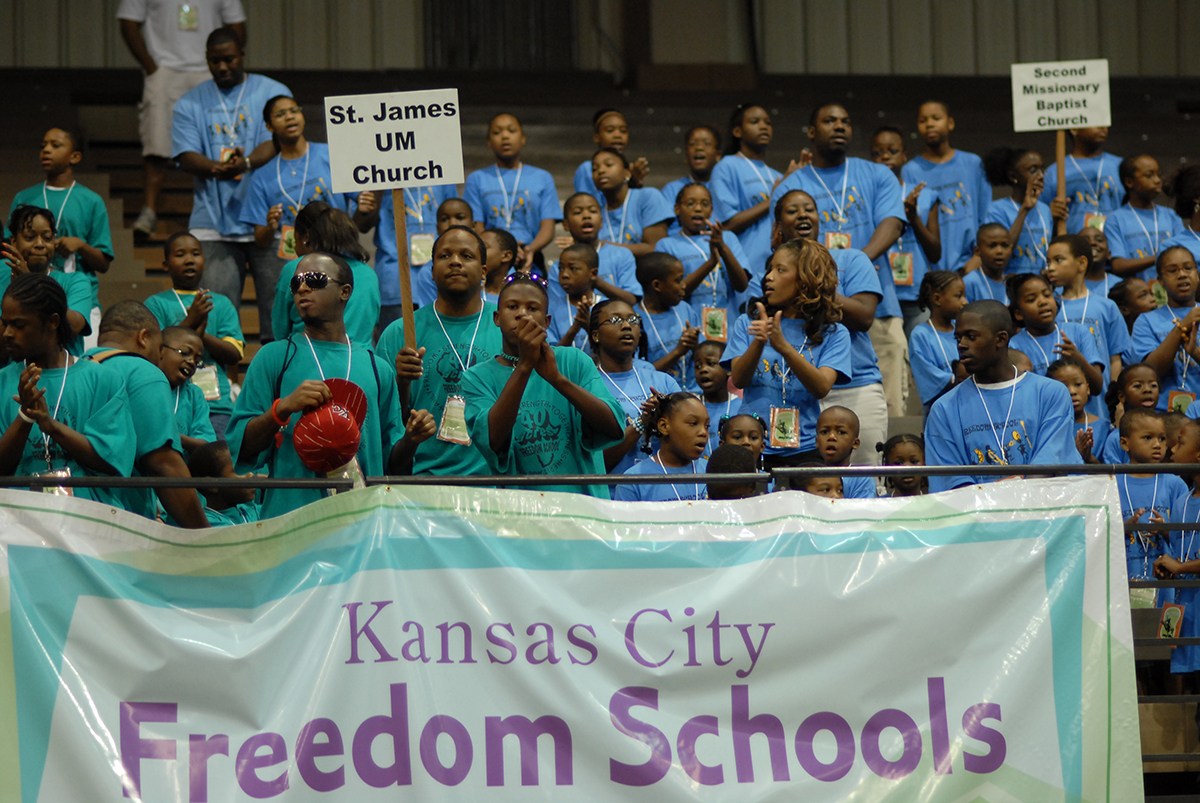
GROUNDED IN KANSAS CITY: Civic life • Youth voice • Community learning
PRESIDENT & CEO: Bob Rogers (1990-1995) • Lou Smith (1995-2002)
01 Opportunity
Kansas City needed strong civic anchors and accessible places where people could learn, connect, and help shape their community.
02 Action
The Foundation invested in Science City, the Negro Leagues Baseball Museum, Legacy Park, Freedom Schools, Exchange City, and a Youth Advisory Board.
03 Impact
$25 million
was initially committed to Science City at Union Station, strengthening a regional destination for hands-on STEM learning.
04 Legacy
The Foundation became more deeply embedded in Kansas City’s civic fabric and showed that opportunity depends on institutions, places, and community voice that can endure.
Featured stories from 1995–2002
-
1995-2002
Deepening Roots in Kansas City
Education
-
Youth Advisory Board: Putting young people at the grantmaking table
1995-2002
Deepening Roots in Kansas City
Education
-
Bigger than baseball: The Negro Leagues’ social justice history
1995-2002
Deepening Roots in Kansas City
Kansas City
-
Kansas City


Local ideas reach farther when people connect with purpose.
2003–2011 | Build National Entrepreneurship
Entrepreneurs and partners built networks that shared knowledge, created momentum, and extended Kansas City’s influence.
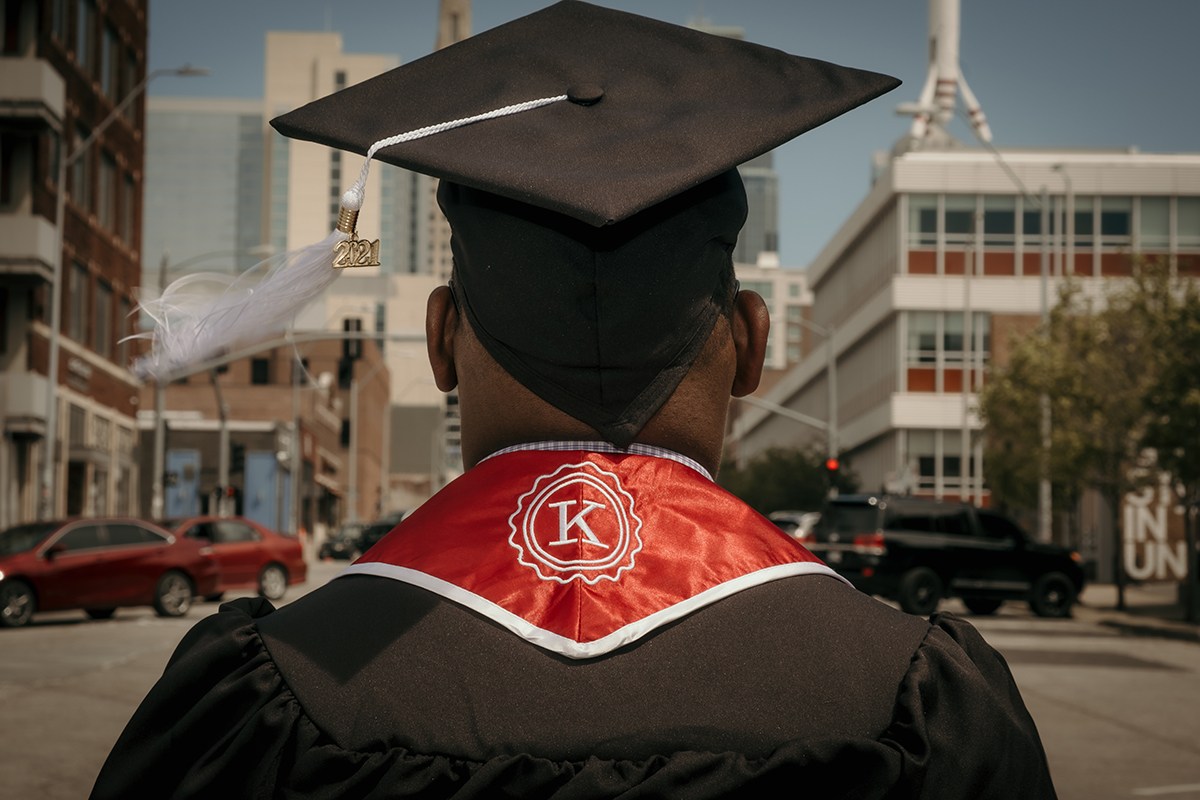
GROUNDED IN KANSAS CITY: Entrepreneurship • Research • Global networks
PRESIDENT & CEO: Carl Schramm (2003-2011)
01 Opportunity
Entrepreneurs needed access to peers, knowledge, and institutions that could help ideas travel farther. Kansas City students also needed longer-term paths to college.
02 Action
The Foundation built research and convening platforms while advancing Kauffman Scholars, the Ewing Marion Kauffman School, KC STEM Alliance, and other local education initiatives.
03 Impact
190+
countries are now connected through Global Entrepreneurship Week, launched by the Foundation and partners in 2008.
04 Legacy
Kansas City became a proving ground for networks, research, and programs built locally and shared widely.
Featured stories from 2003–2011
-
Kauffman Scholars: A long-term investment in college success
2003-2011
Building National Entrepreneurship
Education
-
Global Entrepreneurship Week: Taking ideas to the world
2003-2011
Building National Entrepreneurship
Entrepreneurship
-
StartUp America Partnership to energize entrepreneurial ecosystems and scale startup activity
2003-2011
Building National Entrepreneurship
Entrepreneurship
-
2003-2011
Building National Entrepreneurship
Education


Stronger systems begin with stronger local connections.
2012-2023 | Renewing a Regional Focus
The Foundation renewed its regional focus, linking schools, employers, entrepreneurs, and civic partners around more inclusive pathways to opportunity.
GROUNDED IN KANSAS CITY: Regional systems • Workforce pathways • Entrepreneur ecosystems
PRESIDENT & CEO: Benno Schmidt, interim (2012) • Tom McDonnell (2013-2014) • Wendy Guillies (2014-2022) • Susan Chambers, interim (2022-2023) • Dr. DeAngela Burns-Wallace (2023-present)
01 Opportunity
Students, workers, and entrepreneurs needed clearer routes to opportunity and stronger connections among the institutions meant to support them.
02 Action
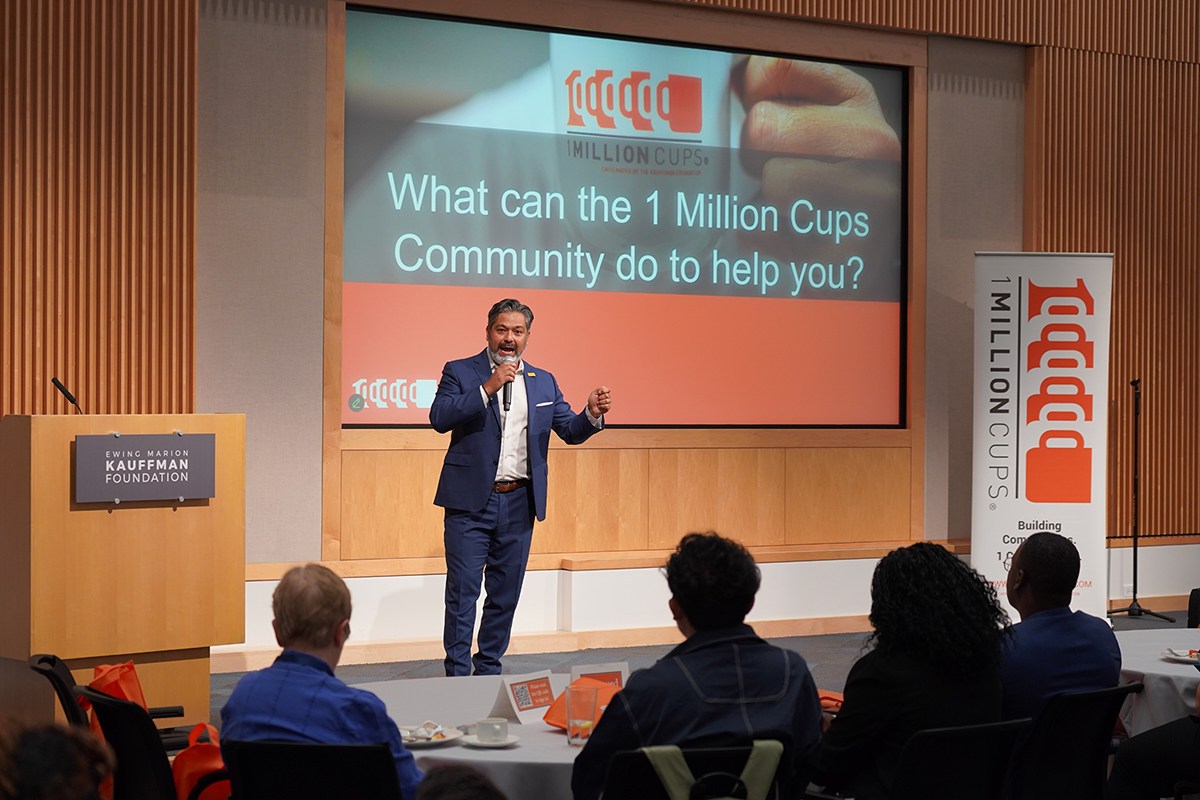
Initiatives including 1 Million Cups, Real World Learning, ProX, Skilled KC, KC Scholars, and the ESHIP Summit brought people together to build solutions across systems.
03 Impact
120+
U.S. communities adopted 1 Million Cups, expanding a Kansas City idea through locally-led peer learning.
04 Legacy
This era shifted the emphasis from individual programs to connected ecosystems, regional ownership, and more inclusive pathways into education, work, and entrepreneurship.
Featured stories from 2012-2023
-
Education
-
Mayors Conference designed to strengthen entrepreneurship-led economic development
2012-2023
Renewing a Regional Focus
Entrepreneurship
-
2012-2023
Renewing a Regional Focus
Entrepreneurship
-
City Year Kansas City increased support for thousands of students
2012-2023
Renewing a Regional Focus
Education


Economic mobility grows when pathways work together.
2024-present | Elevating Economic Mobility
Drawing on six decades of learning, the Foundation aligned its work around helping more Kansas Citians build stability, mobility, and choice.
GROUNDED IN KANSAS CITY: Economic mobility • Community leadership • Systems change
PRESIDENT & CEO: Dr. DeAngela Burns-Wallace (2023-present)
01 Opportunity
Too many Kansas Citians still face disconnected pathways to college, careers, entrepreneurship, and long-term financial stability.
02 Action
The Foundation organized its work around college access and completion, workforce and career development, and entrepreneurship, supported by clearer, community-infomred grantmaking pathways.
03 Impact
3
strategic priorities now work together under one goal: advancing equitable economic mobility across the Kansas City region.
04 Legacy
This chapter carries forward a community-rooted, evidence-informed approach and looks toward a 2035 vision of Kansas City as a national model for equitable economic mobility.
Featured stories from 2024-present
-
A project to learn from, and honor, 60 years of the Ewing Marion Kauffman Foundation
2024-present
Elevating Economic Mobility
Research and Policy
-
2012-2023
Renewing a Regional Focus
I was most excited about Real World Learning. I have never seen something take off where there is agency and ownership in the school district and with the faculty and students and parents over something… I think there's so much potential there, and we're a model, and no one else is doing something quite like this.
— Wendy Guillies, former Foundation president and CEO, 2015-2022
Education
-
30 years of data: The Kauffman Indicators of Entrepreneurship
2024-present
Elevating Economic Mobility
Entrepreneurship
-
Kauffman Uncommon Leader Awards: Elevating local leadership
2024-present
Elevating Economic Mobility
Kansas City


